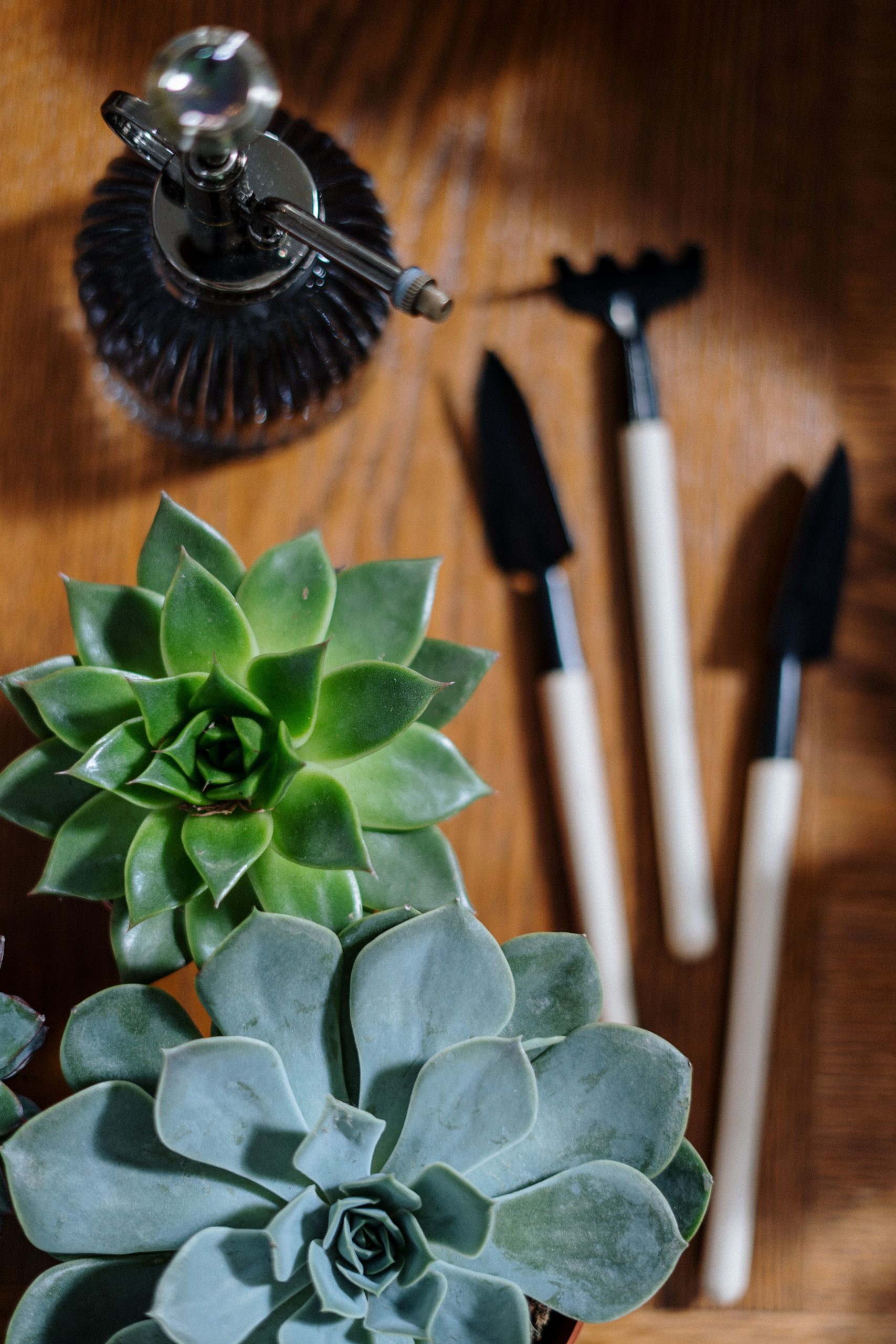
When you’re new to houseplants, it’s easy to feel like you need to buy a lot of things before you can start. Grow lights, special tools, sensors, fertilisers. If you’ve watched any plant videos online, then you’re likely also bombarded with advertisements for various products. It can feel confusing to begin with.
But the truth is you probably have most of what you need to begin already. What’s most important in the beginning isn’t the latest tool or piece of tech but developing your own attention to, and understanding of, your plants. That means taking the time to observe and notice your plants, how they grow in your home environment, and making time for their care when it’s needed. Tools can help sometimes, but they won’t make you an expert. Only slow and observational learning over time can.
Before you buy anything: If you already have something that works, you don’t need to replace it.
I have gathered together a small, considered toolkit focused on simplicity, re-use, and choosing things intentionally.
Checking soil: use your hands
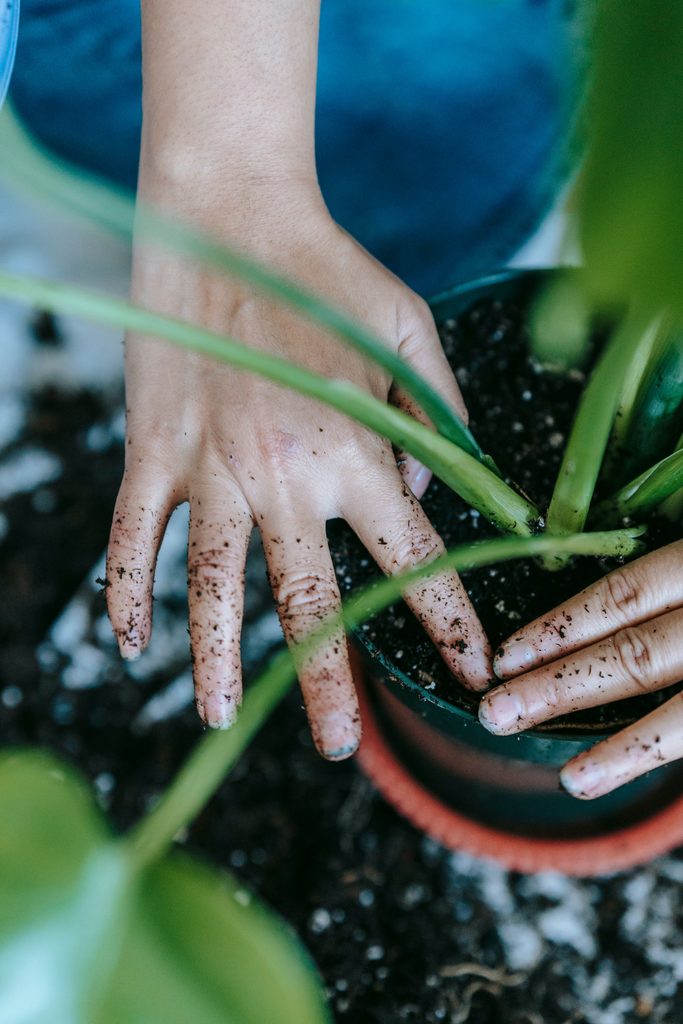
Of all the “tools” people ask about, moisture meters come up often. But I don’t use them. They’re not bad by any means, but I prefer a better tool: my hands! Yes, hands are arguably a gardener’s best tool. There’s so much that can be learned simply by feeling and interacting with your plants and the soil. Get your hands dirty!
Learning to check soil with your hands and fingers helps you understand:
- how dry or damp the soil actually feels
- how quickly it dries in different rooms
- how weight, texture, and temperature change over time
Moisture meters can be great if you’re worried about doing anything “wrong”, or perhaps you have the most beautifully manicured hands – in which case – I get you! However, using your hands builds up a level of understanding over time that no gadget can give you. Yes, in a world where we want everything instantly, this method and understanding can take time to build. So if you don’t mind getting your hands a little dirty, then keep checking that soil! You’ll feel so proud when the understanding does sink in, and much more confident too.
Your hands are the most useful tool you have here!
Watering
For watering, what matters most is control and being able to add water slowly and intentionally.
What you might already have
- An old water bottle with a small opening
- A jug or carafe
- A small teapot
These all work well, especially when you’re still learning how much water your plants actually need. Plants don’t care what the water comes from!
An optional upgrade
Some people prefer a watering can with a long, narrow spout because it allows more precision when watering at the soil level. This can be helpful if you tend to over-pour or enjoy watering more slowly and mindfully.
One watering can I use both at home and as part of my work is a Haws can. What I appreciate most is the control. The long, narrow spout allows water to reach the soil slowly without flooding the soil surface or splashing leaves. I find this most helpful for my smaller plants and the removable rose head is helpful for more delicate watering of seedlings.
Mine is plastic and lightweight, but if you’re looking to reduce the plastic in your home, Haws also make metal versions, which are beautifully made and designed to last many years, though they’re a higher investment. Neither is necessary – they simply offer different trade-offs around weight, longevity, and cost.
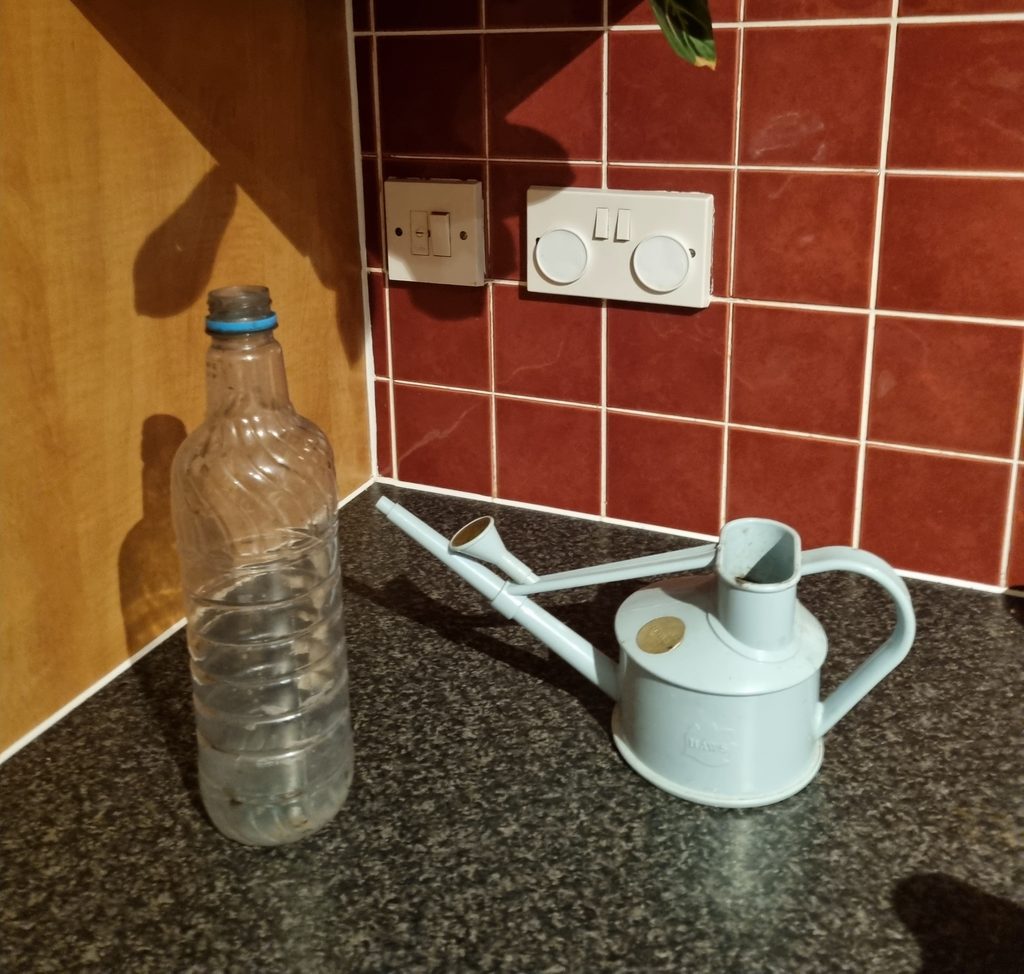
For my larger pots I use an old plastic diluting juice bottle. That’s a squash bottle for the English folks.
Feeding your plants: keep it simple
One common beginner mistake I see as a houseplant doctor is people not feeding their houseplants. The nutrients in the potting soil will get depleted over time so it’s worth having a plant feed in your beginner toolkit, especially during spring and summer when many houseplants are actively growing.
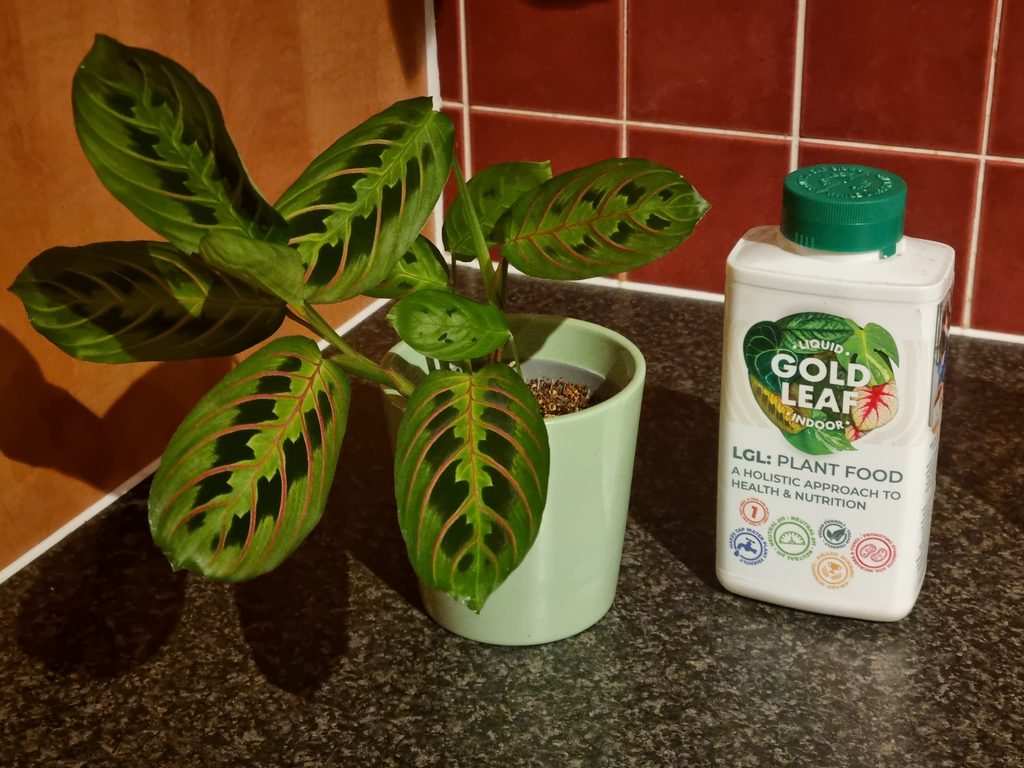
A general-purpose liquid houseplant feed is usually enough for most of the plants in your home. At home I use Liquid Gold Leaf Indoor Plant Food which I’ve found works very well for my plants. It may be a little pricier than other fertilisers you’ll see in large retailers like Dobbies and B&Q but a little goes a long way and I really appreciate the focus on supporting the soil ecosystem (think beneficial microbes and fungi) in addition to feeding the plant. Whatever houseplant feed you choose, follow the instructions on the bottle and avoid the temptation to think that more feed means more growth. Overfeeding can cause problems for plants, so more isn’t necessarily better.
If your plant isn’t growing well, don’t automatically reach for the fertiliser. First ask yourself: is it getting enough good light? Am I watering it appropriately? Is the pot and compost suitable? Is the plant actively growing? Sometimes the answer isn’t another product but a change in how we’re caring for the plant.
Also, many houseplants slow down their growth or go dormant during the darker months. This is something to think about as we move into autumn and winter – you may need to slow down or stop feeding altogether at this time based on your plant’s needs.
A simple rule: get the basics of water and light right first, then feed when your plant is actively growing and needs the extra nutrients.
Dusting leaves: a small thing that makes a real difference
One part of houseplant care that’s almost always forgotten is leaf cleaning. And yes, even I forget this quite often too, but it’s a super important part of houseplant care.
Over time, dust settles on leaves just like it does on shelves. A layer of dust can reduce the amount of light reaching the leaf surface. Keeping leaves reasonably clean can therefore help your plants make the most of the light available to them.
You might see special products or sprays advertised, but you really don’t need these.
All you need is:
- a clean, soft and lightly damp cloth
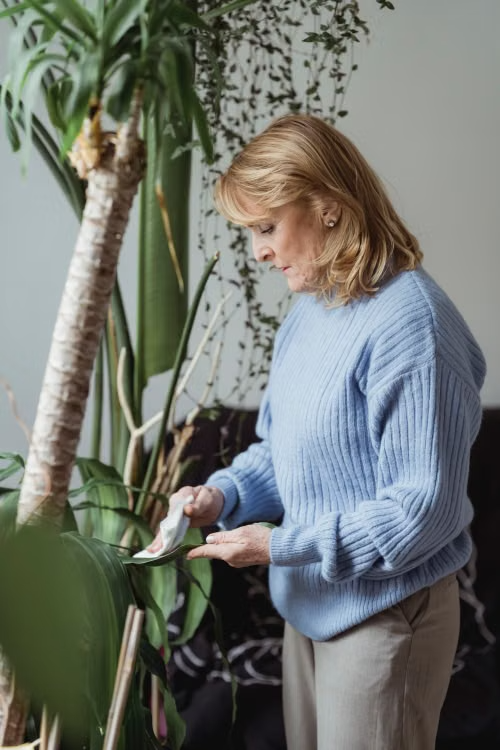
Gently wiping the tops of leaves every so often helps remove dust while also giving you a chance to notice any changes in texture, colour, growth, or any pests that might be hiding on your plant.
If a leaf feels fragile or fuzzy, it’s fine to skip wiping it – not every plant needs the same treatment, and sometimes you might end up damaging the more fragile leaves.
This is a small practice that supports plant health without adding any extra expense.
Cutting and tidying: using what’s close by
Occasionally you’ll need to remove a yellow leaf, trim leggy growth, or tidy a plant back a little.
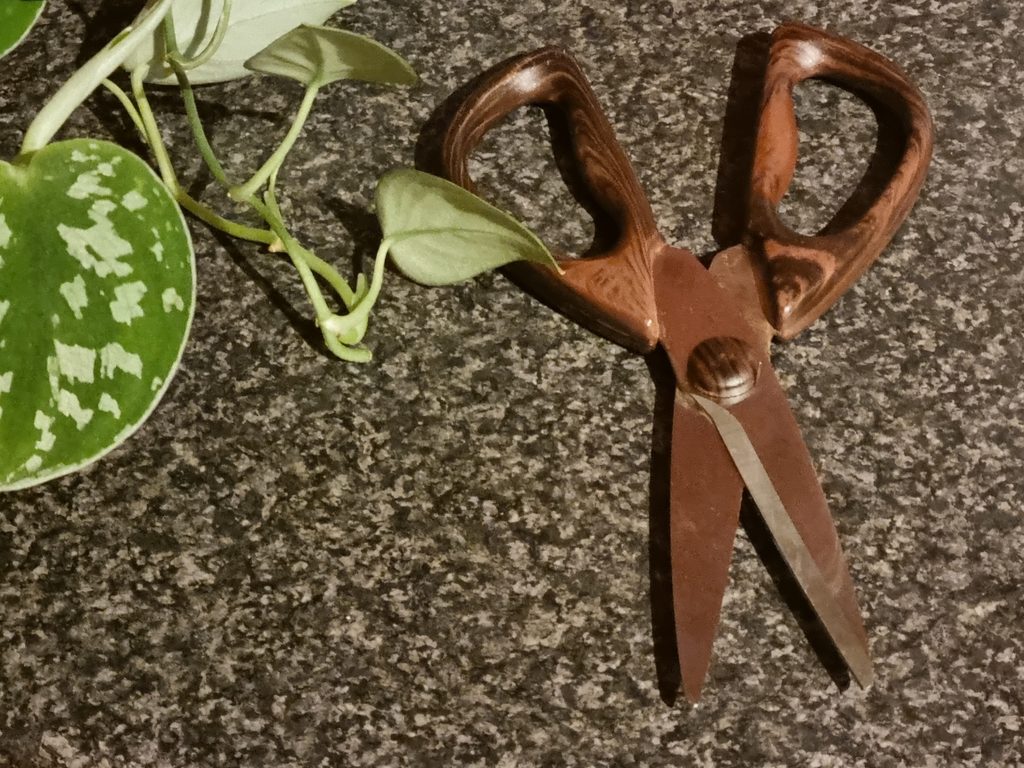
What you can use
- A pair of clean, sharp kitchen scissors is usually enough
- Clean the blades before and after use
It’s OK to remove old or dead growth. I get that question a lot in my work as a houseplant doctor. I’ve found that many beginners panic, thinking that removing any leaves at all will somehow damage the plant.
Removing a few dead or dying leaves generally won’t harm a healthy plant, and pruning back certain plants can encourage new growth. But before you prune, take a moment to look at the leaves carefully – are they giving you a clue to any changes you might need to make to your houseplant care?
Rule of thumb: try not to remove more than 30% of the plant in one session to prevent the plant going into shock.
About specialist pruning tools
As part of my work, I use Japanese gardening scissors made by Niwaki. I’m sharing this because I often get asked what I use in my day to day houseplant doctor work. They are beautifully balanced, extremely sharp, and designed to last for years. I love using them as they’re comfortable for me when doing lots of houseplant doctor work – but they are also expensive, and they are absolutely not necessary to care for houseplants at home. At home I often use what I have to hand – which is a pair of cleaned kitchen scissors.
I do think of tools like this, though, as “buy once, keep forever” items. If you enjoy using well-made tools that last and know you’ll use them often, they can be a pleasure to gift to yourself or a friend. But secateurs and specialist scissors are not a requirement for most soft stemmed houseplants – and perfectly good alternatives exist.
You don’t need professional tools to be a good plant parent.
Pots, containers, and keeping things light
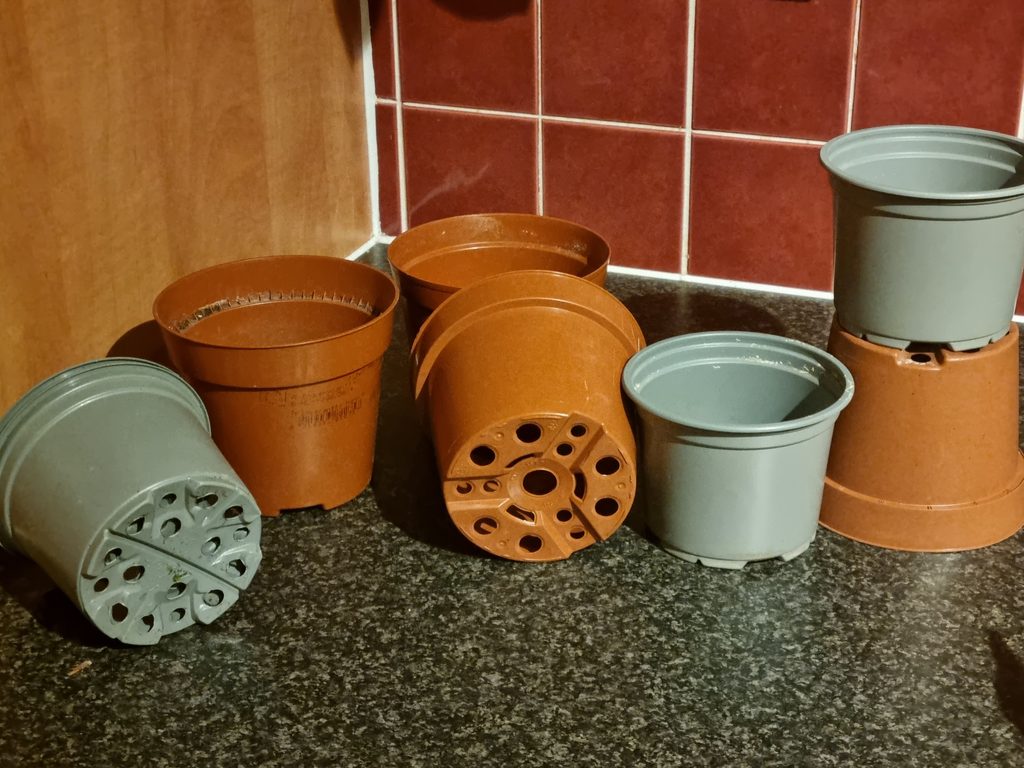
Plants don’t need aesthetic pots to thrive.
Lightweight nursery pots are often easier to manage because you can feel their weight change as the soil dries. A saucer, small plate, or tray can be used underneath if you don’t have any “decorative” containers.
If you’re choosing a pot, aim for:
- drainage holes – I cannot emphasise how important this is. As a houseplant doctor, I see so many houseplant “patients” in pots that don’t have drainage holes, with owners wondering why the plant is poorly. If there are no drainage holes, there’s nowhere for excess water to drain away, which can contribute to waterlogged compost and root problems. If you want a pretty pot, make sure it is in a nursery pot with drainage holes first, then you can put that pot into the pretty decorative pot
- something easy to lift – this helps significantly for larger plants when you need to repot them and water them
Community share or Buy Nothing groups
Nursery pots can be bought online, but I’d also suggest checking out your community share or zero-waste groups. I often see posts for pots needing a new home because someone is moving or travelling or has simply potted up or down and has pots to spare.
Re-use
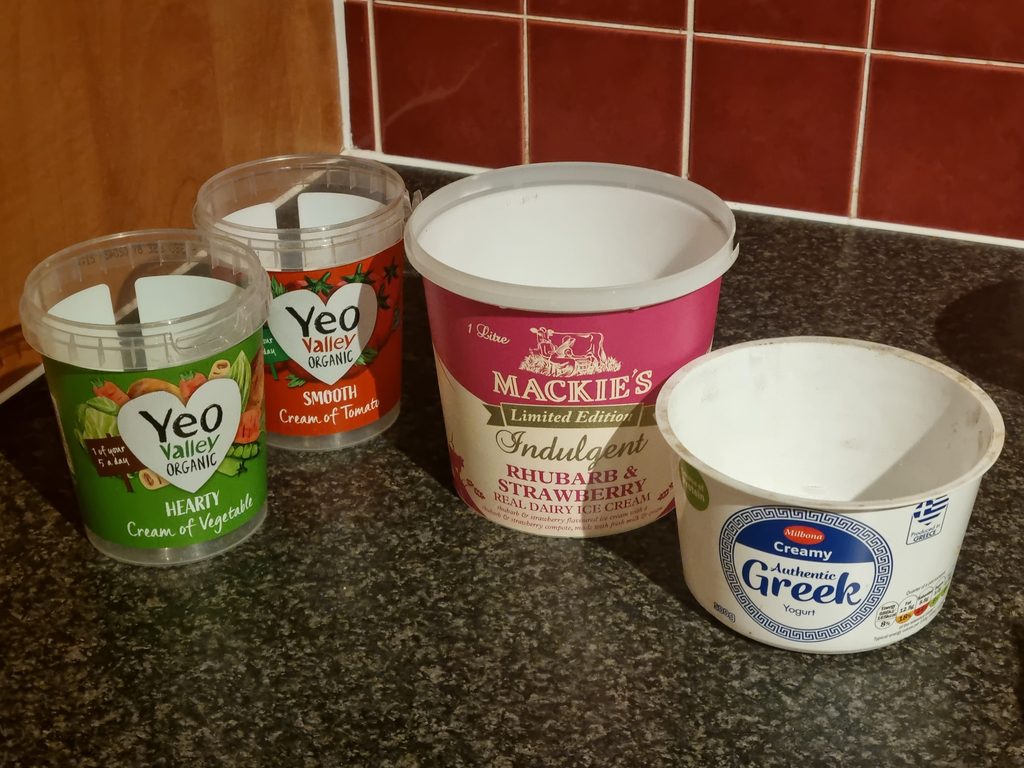
Often, clean plastic food containers can make great growing pots. Yoghurt pots work well – just remember to add drainage holes to the bottom!
Things I don’t own or use
There are many tempting products aimed at beginners. But even after years of looking after houseplants there are still many I’ve found I just didn’t need so I wouldn’t rush to buy the following unless you really have a specific need:
- moisture meters – I prefer to use my eyes and hands to see and feel the soil – my best learning has come from this method and I rarely over water anymore as a result
- large bottles, or many different bottles, of fertiliser – I live in a small flat in the city, one small bottle of general purpose houseplant feed has worked well for all my plants and smaller bottles save on space
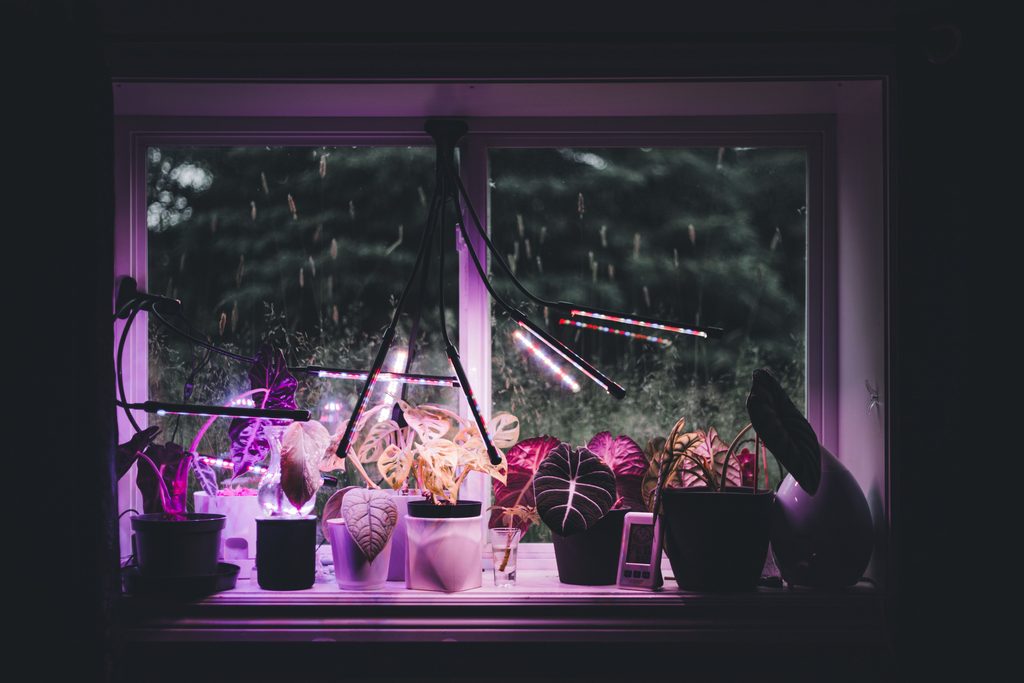
- grow lights – they can be incredibly useful in the right situation, but they aren’t automatically something every beginner needs
- apps – this could be a controversial one. I’ve never used an app to diagnose plant problems because there can be so many reasons for yellowing, browning, paling, spotting or stunted leaves. I’ve often wondered how an app can truly know what the issue is if it can’t gather all the information. It can’t see or feel the condition of the soil, check under the leaves and into every nook and cranny for pests, notice water sitting in the bottom of the pot, or understand the plant’s recent care and growing conditions. That’s not to say plant diagnosis apps can’t be helpful. They can offer a quick starting point, especially for beginners. However, I prefer the slower process of observation, research and learning from experience. By paying close attention to my plants and reading up on potential causes and indicators, I feel I gain a much better understanding of what might be going on. Over time, this has helped me build confidence in my own judgement and develop a deeper connection with my plants, rather than relying on an app to provide an answer.
Before you buy
Before buying another plant tool, ask yourself:
- What problem am I actually trying to solve?
- Could I use something I already have?
- Do I understand what my plant needs?
- Will this make plant care easier, or am I buying it because I’ve seen it online a bazillion times?
- Will I use it regularly?
The Leafy Little Win
You don’t need specialist tools to start caring for plants, and you probably have much of what you need at home already. What is actually more important is time, attention, and a willingness to notice small changes in your plants.
My actual houseplant toolkit that I use all the time:
- My hands!
- A jug/watering can
- Kitchen scissors
- A soft cloth
- Nursery pots and saucers
- A general-purpose plant feed
That’s about it.
If you choose to buy something, let it be because it genuinely supports your learning and not because you feel you’re missing out or you think it’ll make you a better houseplant parent.
Starting out simply is absolutely fine! It’s a fun and sustainable place to begin.
Leave a Reply