Direct/Indirect, Low Light, & More
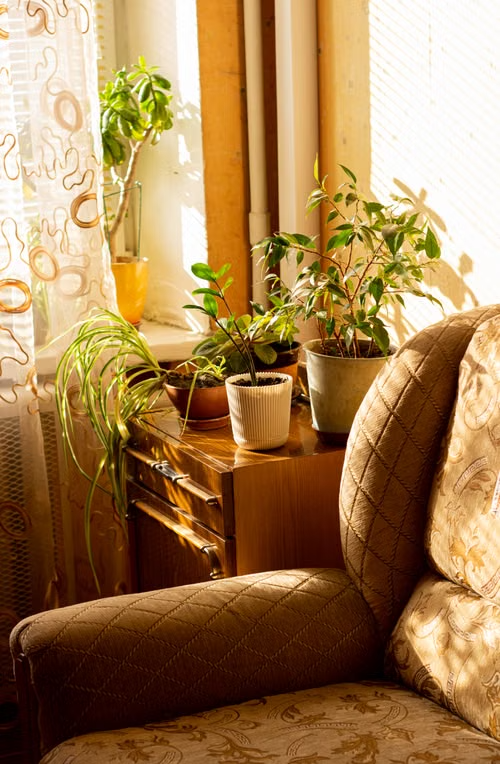
If you’ve ever read a plant care label and wondered what “bright indirect light” or “morning sun” actually means, you’re not alone. Light is one of the most important factors in keeping houseplants healthy, but a common stumbling block for beginners. It’s difficult to know what houseplant light levels are exactly. Plant labels often use terms like low light, partial shade or south-facing window without explaining what they actually mean in real life. At worst, plants labels sometimes don’t even have words, just random symbols that could mean anything.
In this guide, I’ll break down some of the most common light terms you’ll come across and explain how they apply to your home.
Why Do Houseplants Need Light?
All plants need light to survive and grow. They use light energy to make food through a process called photosynthesis.
Plant leaves contain chlorophyll, a green pigment that absorbs light. Chlorophyll absorbs light strongly in parts of the blue and red regions of the visible light spectrum, and plants use this light energy to power photosynthesis.
The word photosynthesis comes from two ancient Greek words:
- photo- (from Greek phōs or phōtos) meaning “light”
- synthesis (from Greek synthesis) meaning “putting together” or “combining”
Basically, plants use light energy to combine water and carbon dioxide to produce sugars. These sugars provide the energy to help fuel growth, produce new leaves, support roots and keep the plant functioning. Oxygen is released as a by-product.
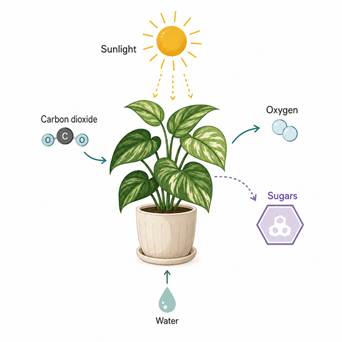
So, without enough light, a plant may not be able to photosynthesise efficiently enough to support healthy growth. You may notice that it:
- Grows slowly
- Produces smaller leaves
- Develops pale or less vibrant foliage
- Becomes stretched or “leggy”
- Produces fewer flowers
- Produces greener growth on some variegated plants or looses variegation
- Drops leaves
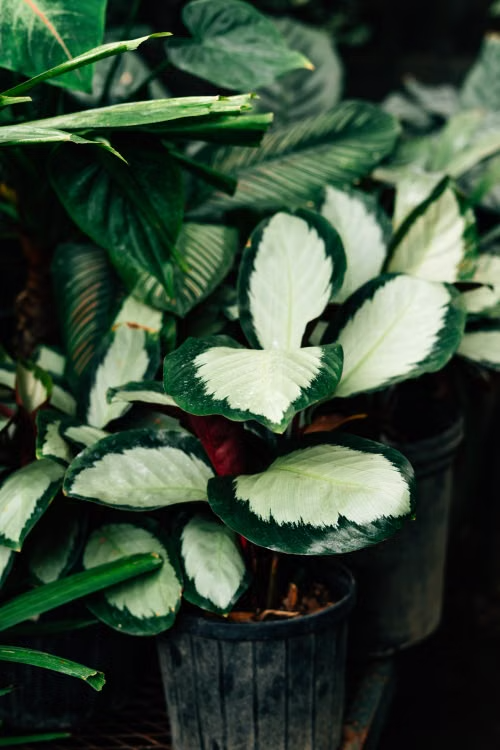
For variegated plants, like the one below, the white or cream parts of the leaves contain less chlorophyll than the green parts. This means that highly variegated plants can sometimes need brighter light conditions to produce enough energy and maintain strong colour contrast.
While water is important, light levels are often a factor that limits how well a houseplant grows indoors. The balancing act between light and water is vital. As I mentioned in my previous post on how to water houseplants, plant placement and the amount of light a plant receives can also affect how quickly its compost dries out and how much water it uses. Getting light right can be another leafy little win.
Lightbulbs vs Sunlight
Not all light is equal when it comes to growing plants.
A bright household lightbulb may look very bright to us, but if it’s the only light source available, it may provide too little usable light for a houseplant, particularly if the bulb is far away from the plant.
Plants use light in the photosynthetically active radiation (PAR) range, which is generally defined as wavelengths between 400 and 700 nanometres. Sunlight provides plenty of this light, whereas ordinary household light bulbs produce much less light that is useful for photosynthesis. This is one reason why a room can look bright to us but still not provide enough light for a houseplant to grow well. Our eyes are much more sensitive to light than plants are, and plants need a surprisingly large amount of light to photosynthesise effectively.
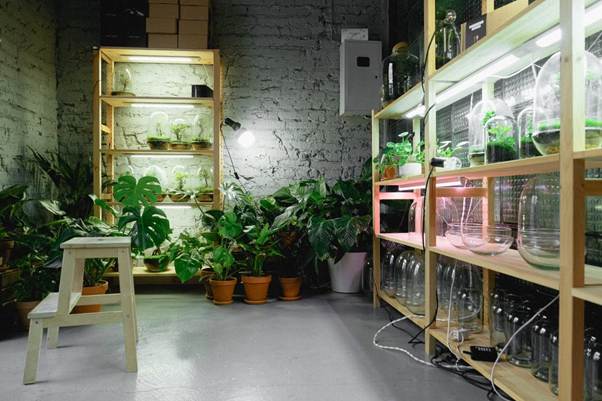
There are, however, artificial lights specifically designed for growing plants. These are often called grow lights and can provide much higher levels of usable light than ordinary household lighting Grow lights can be a great addition for plants in rooms or corners that don’t get enough natural daylight.
I’ll explain more about grow lights in a future blog post.
Bright Direct Light
Direct light means that sunlight shines directly onto the plant’s leaves without being filtered by a curtain, blind or other obstruction.
You can often tell that a plant is receiving direct sunlight because it casts a strong, clearly defined shadow.
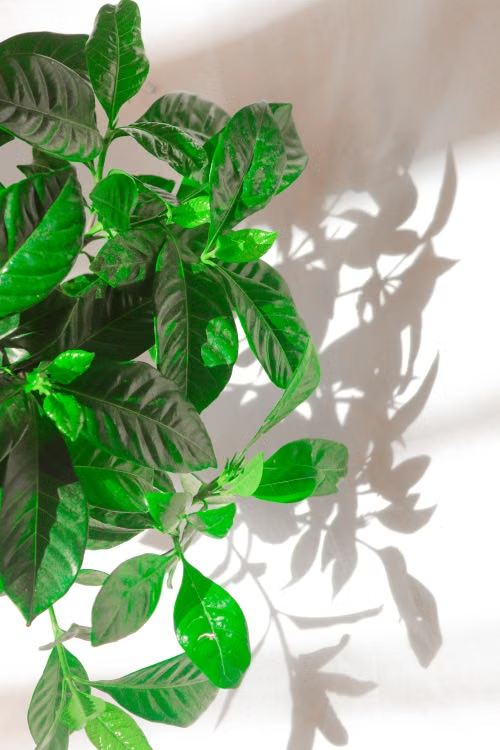
Examples include:
- A south-facing windowsill that receives direct sunlight for several hours
- An east-facing windowsill that receives direct morning sunlight
- A west-facing windowsill that receives direct afternoon sunlight
The amount of direct sunlight varies depending on the season, window size, nearby buildings and trees, and how close the plant is to the glass.
Some plants, including many desert succulents and cacti, thrive in bright direct sun. Others, particularly plants adapted to forest floors or filtered/dappled light, can develop scorched or bleached leaves if exposed to strong direct sunlight for too long.
Some easy, reliable plants for a bright, sunny windowsill include:
- Jade Plant
- Aloe vera
- Rosemary
- Echeveria
- Pelargonium
- Ponytail Palm
Even sun-loving plants may need a little protection from very strong summer sunlight, particularly when grown behind glass.
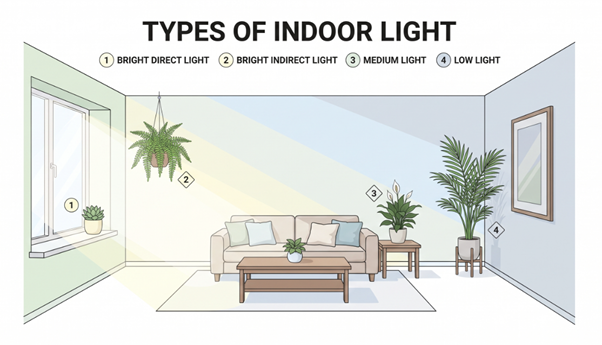
Bright Indirect Light
Bright indirect light is probably the most common recommendation you’ll see on houseplant labels and care guides.
It generally means that the plant receives plenty of bright daylight, but direct sunlight isn’t shining onto its leaves for long periods. This is sometimes called ‘medium’ light.
Examples include:
- A few feet back from a south-facing window, where the room is bright but full sunlight doesn’t directly touch the plant
- Behind a sheer curtain at a bright south-, east- or west-facing window
- In a bright room where daylight fills the space but doesn’t fall directly onto the plant
Bright indirect light can provide plenty of energy for growth while reducing the risk of leaf scorch for plants that don’t tolerate strong direct sun.
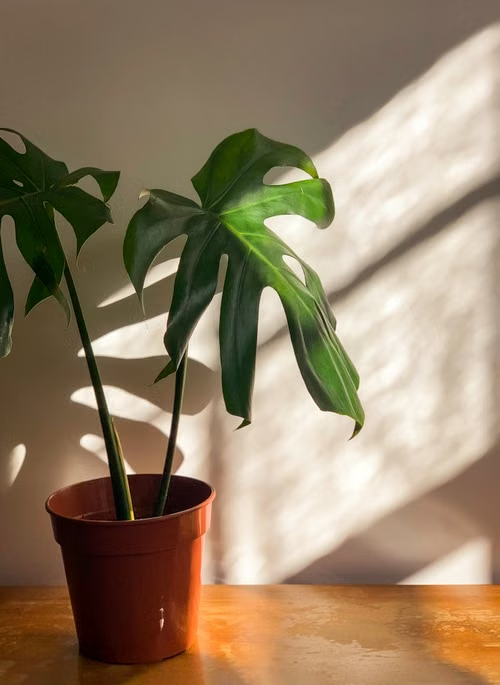
Many popular houseplants, including Monsteras, Philodendrons and Peace Lilies, can do well in bright indirect light.
My recommendations for plants that like bright indirect light:
- Swiss Cheese Plant
- Rubber Plant
- Peace lily
- Bird of Paradise
- Kentia Palm
- Calathea
For plants that can tolerate low light it doesn’t necessarily mean they will thrive in low light. Many of these plants will grow faster and produce more lovely looking, stronger growth when given brighter conditions.
Low Light
Low light doesn’t mean no light.
A common misconception is that plants that can tolerate low-light can survive happily in dark corners. In reality, all plants need light.
Low light generally means a position where there is some natural daylight, but the plant receives relatively little usable light. For example:
- A room with a window but limited natural light, perhaps because the window is small or light is blocked by a nearby building
- A position set back from a window
- Some north-facing rooms, particularly during the darker months of the year
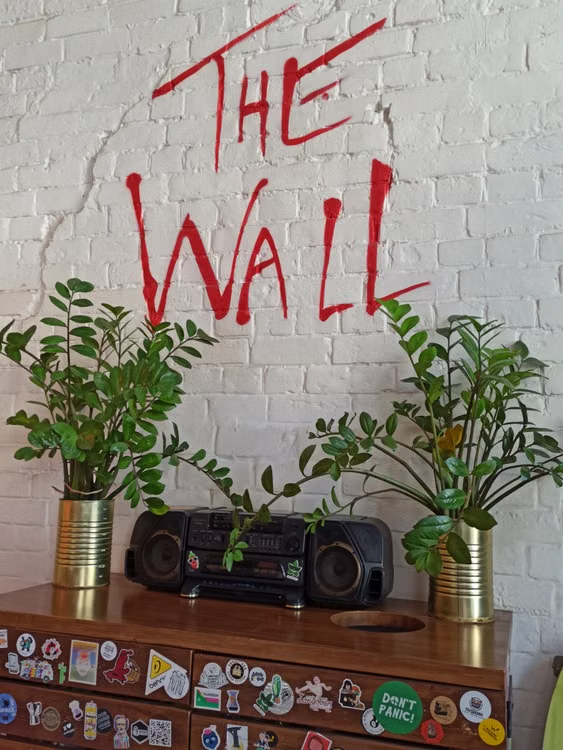
Here is an example of somewhere that could be considered low light, even though it doesn’t look dark to our eyes. This could be several feet away from a window or against the wall furthest from a window. Notice very little shadow, if at all, being cast.
Remember that tolerating lower light isn’t necessarily the same as thriving in it. Many of these plants will grow faster and produce stronger growth when given brighter conditions.
Here are some houseplants that can tolerate lower light:
- ZZ Plant
- Snake Plant
- Cast Iron Plant
- Parlor Palm
- Heartleaf Philodendron
- Satin Pothos
Variegated plants can be particularly challenging in low light. Some, such as variegated Dumb Cane, may produce greener growth or lose some of their strong contrast when light levels are too low.
Shade
“Shade” is another term that can be confusing when you’re growing houseplants.
Outdoors, shade usually refers to an area protected from direct sunlight by buildings, trees or walls. Indoor shade can be much darker than outdoor shade though as there may be very little daylight reaching the room.
Think about trying to read a book in a room or shady corner during the day. If doing so is tricky without turning on a light, the area is likely too dark for many houseplants.
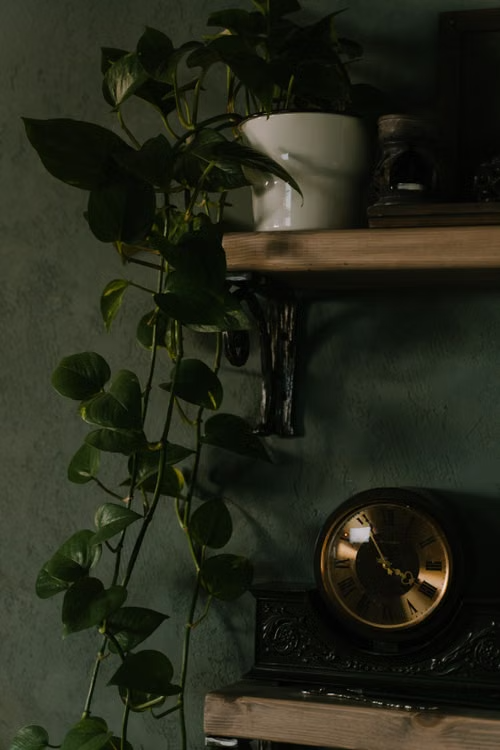
There are lots of houseplants described as “shade tolerant”, but low-light tolerant is a more useful way of thinking about them.
Even plants that tolerate low light still need daylight. If you have a particularly dark corner where you’d love to keep a plant, you might find a grow light helpful..
Why Does Window Direction Matter?
The amount of light a plant receives can depend heavily on which direction your window faces.
This is why houseplant care guides often refer to north-, east-, south- and west-facing windows. Knowing the direction of your windows gives you a useful starting point for understanding how much sunlight might reach different parts of your home and what intensity it is.
But…. Window direction is only part of the picture. Window size, nearby overshadowing buildings or trees, curtains, the season and the distance between your plant and the window can all make a big difference.
If you’re unsure which direction your windows face, most smartphone compass apps can help.
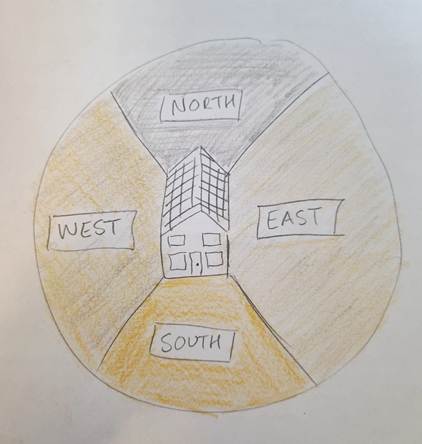
This hastily sketched illustration is my ‘attempt’ to show the different intensities of light based on window direction. With south being the most intense and longest duration and north being the lowest light. West can have more direct hot afternoon sun and east more cooler direct morning sun. East and West will experience direct sunlight for only part of the day.
North-Facing Windows
In the UK, north-facing windows generally receive the least direct sunlight throughout the day.
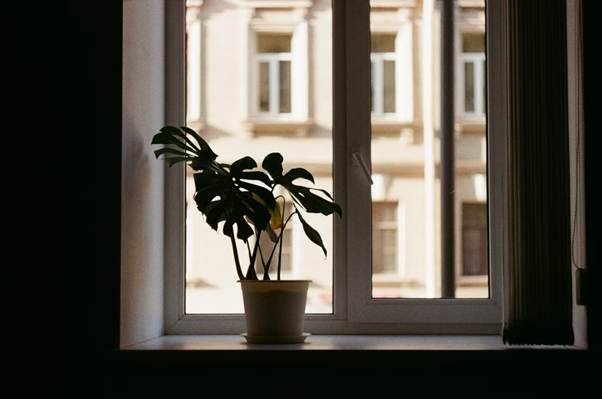
They typically provide:
- Consistent but relatively low light
- Little or no direct sunlight
- Cooler conditions than south- or west-facing windows
These windows can be suitable for plants that tolerate lower light, although a north-facing windowsill can become particularly challenging during the shorter, darker days of winter.
East-Facing Windows
East-facing windows receive direct sunlight during the morning.
They typically provide:
- Bright light early in the day
- Gentle morning sunlight
- Cooler conditions than west-facing windows
Many houseplants enjoy east-facing windows because they receive direct light without necessarily being exposed to the strongest afternoon sun.
Many plants that enjoy bright indirect light will do well on or near an east-facing window, although individual plants will vary.
West-Facing Windows
West-facing windows receive sunlight later in the day.
They typically provide:
- Bright afternoon light
- More intense sunlight than an east-facing window
- Warmer conditions, particularly in summer
Some plants enjoy west-facing windows, while others may need to be positioned slightly further back or protected by a sheer curtain to avoid leaf scorch.
Many plants that enjoy bright indirect light can thrive near a west-facing window, while some sun-loving plants may also be happy with the stronger light.
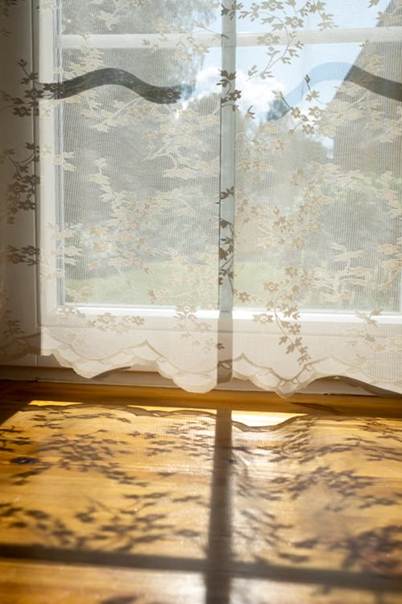
South-Facing Windows
South-facing windows generally receive the greatest amount of sunlight in the UK, particularly during the middle of the day.
They can provide:
- Bright direct light
- Several hours of direct sunshine
- Some of the highest indoor light levels available
Sun-loving plants such as many succulents and cacti often thrive near south-facing windows. However, many leafy tropical houseplants can struggle with long periods of strong summer sun and may develop scorched or bleached leaves.
A south-facing windowsill can also become surprisingly hot, particularly in summer. Compost may dry out more quickly, and plants can become stressed by a combination of intense light and high temperatures.
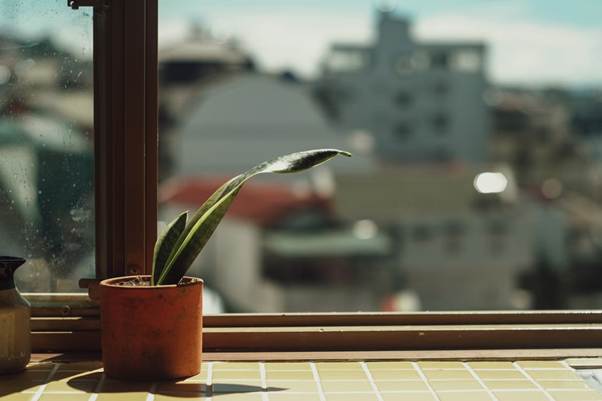
My flat has all south-facing windows, and I find that the majority of my houseplants thrive a few feet away from the window, out of direct sunlight but still in bright indirect light.
Here are some of my recommendations for easy, reliable plants for a bright south-facing windowsill:
- Jade Plant
- Aloe vera
- Rosemary
- Echeveria
- Pelargonium
- Ponytail Palm
Watch Out for Summer Heat
Even in the UK, a south-facing windowsill can become very hot on sunny summer days.
Signs that a plant may be receiving too much direct sun include:
- Bleached or washed-out patches on leaves
- Brown, crispy patches on leaf edges
- Wilting or leaf damage, particularly when combined with high temperatures
If that happens, try moving the plant a short distance away from the window or providing some protection with a light net curtain.
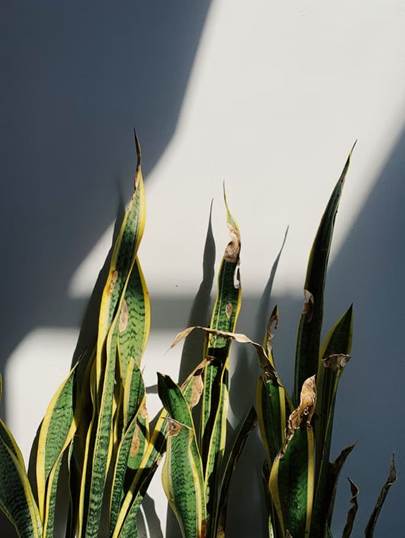
Brown spots on leaves and leaf edges can be a sign of plant ‘sunburn’, so if your plant is sitting on a sunny windowsill consider moving it away from direct sunlight.
A useful rule of thumb: if a plant naturally grows in a desert, Mediterranean climate or another open, sunny habitat, there’s a good chance it will appreciate a bright, sunny position. However, it’s always worth checking the requirements of the individual plant. My post on 5 houseplants for busy people or beginners explores more on how understanding the natural habitat of these houseplants can hint at their light and watering needs.
Morning Sun
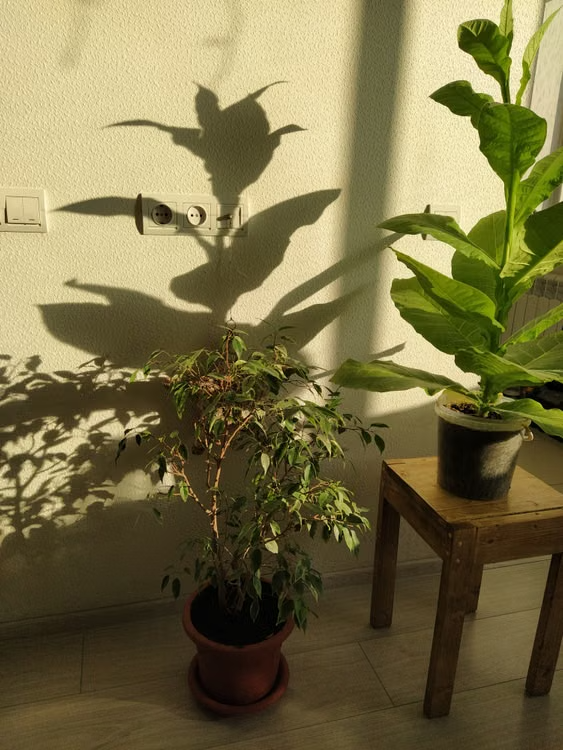
Morning sun refers to direct sunlight received during the earlier part of the day and is commonly associated with east-facing windows.
Morning sunlight is often:
- Cooler
- Less intense than the strongest afternoon sun
- Less likely to cause scorching for some plants
Because of this, many plant care guides recommend morning sun for plants that enjoy some direct light but may be more sensitive to strong afternoon sunshine.
Of course, the actual intensity will depend on the season, window orientation and your home’s surroundings.
Afternoon Sun
Afternoon sun refers to direct sunlight received later in the day and is commonly associated with west-facing windows.
Afternoon sunlight is often:
- Hotter, particularly in summer
- More intense
- More likely to heat up the plant and its compost
Plants that tolerate full sun often cope well with strong afternoon sunlight, while more delicate species may show signs of stress if exposed to it for too long.
The leafy little win
Understanding common light terms makes houseplant care a little easier and you’ll be much better equipped to place your plants where they can thrive.
It might not be possible to find the perfect spot and you may need to move your plants around as the seasons change, particularly in the UK where the difference between summer and winter daylight can be significant. And perfection is not what we’re here for, at least I’m not!
Sometimes, trial and error is needed, and I find that’s where I get the most satisfaction. It’s a little win like moving a poorly plant somewhere else and then seeing it thrive that makes my leafy soul happy 😊
Leave a Reply