You’ve brought home a new houseplant. You’re observing your houseplant and have the urge to care for it and do something right away.
You’re probably wondering:
- Should I water it?
- Does it need a new pot?
- Should I feed it?
- Where should I place it?
- Is this spot bright enough?
- Am I already messing this up?
This is completely normal. We care about our new plant and want to give it the best start. However, taking actions straight away can sometimes cause stress for the plant as it needs time to adapt to its new environment.
Here’s another little secret, and something that often surprises beginners: you don’t need to fix, change, or improve anything straight away.
One of the most important skills in houseplant care isn’t watering or feeding.
It’s observing.
Why observing is vital for houseplant care?
Learning to observe your houseplant regularly can lead to noticing little changes and signals that can help you know what the plant needs.
It is a quiet and practical skill that builds confidence over time.
When I first started looking after houseplants I was obsessed about how often I should water and whether I was following the rules diligently enough. Any change in its state and I was rushing to ‘fix’ it. It can be a little overwhelming, especially if you have several plants – all of which are different species, different sizes, and therefore have different needs. I found it wasn’t easy for me to remember or keep track of several different watering or care schedules.
Overtime I started to become a bit lazy with it all and oddly my houseplant care improved. When I stopped worrying about schedules, or fixing things right now, I had more time to observe and notice what changes and signals my plants were showing me over time that I could then action.
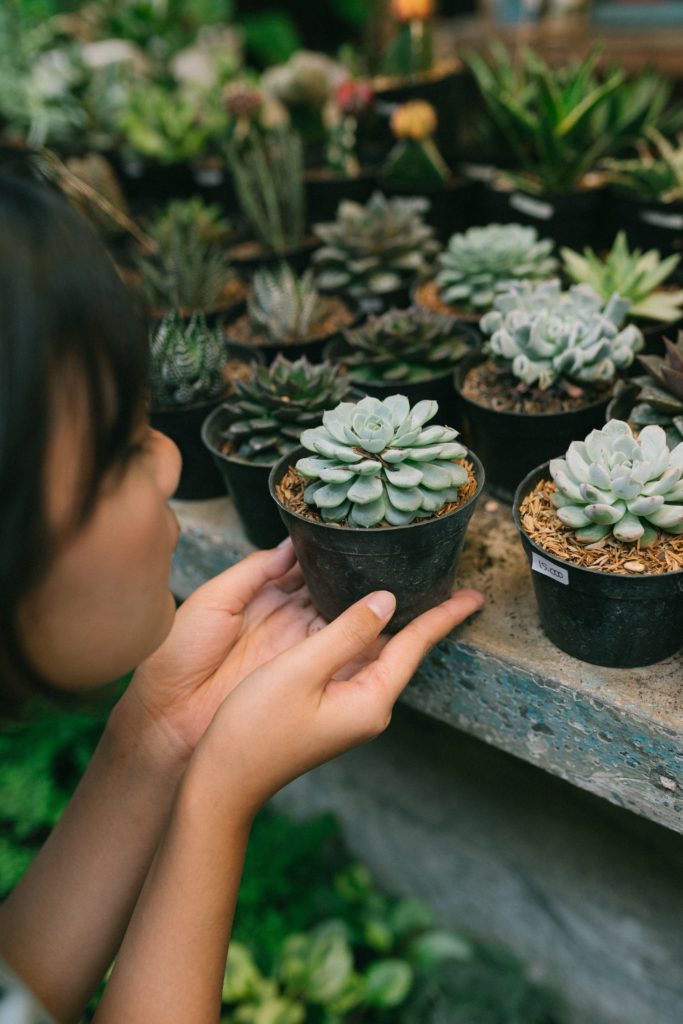
So, before reaching for tools, schedules, or advice online, have a look at your plant closely.
You might observe:
- the shape and firmness of the leaves
- whether the soil feels dry, damp, or heavy
- whether the pot feels light or heavy when lifting it
- how close it is to a window
- whether the light feels soft, bright, or harsh and warm
- if anything has changed since yesterday, last week, or last month (or not at all)
Importantly, there’s no right or wrong in observing. At this stage you’re not diagnosing any issues yet, you’re simply getting familiar with your plant.
Observing gives you a reference point and a sense of what normal looks like for your plant, in your home.
Why can we take our time?
Houseplants live and grow more slowly than humans do and don’t respond instantly to care. They react slowly, over days and weeks. Doing too much too quickly can stress the plant, it simply won’t be able to keep up. It needs time to process each change.
Here’s an example.
Several weeks ago I noticed a plant of mine with leaves curling inwards on itself – a common sign the plant needs water. I checked the soil and, as I expected after a period of dry hot weather, it was bone dry. I gave the soil a generous drench in water like a good plant parent. However, the next day I noticed no improvement. Or the day the after that. After 3 days the urge to water again was overwhelming but the soil was still wet.
So I took a deep breath and waited. After a week and a half I noticed the leaves had finally unfurled completely – and the plant looked happy and normal again. After watering it once, it just needed time.
Our environments are never the same
Additionally, it helps to remember that every indoor space is different. Our homes vary in temperature, airflow, light direction, light intensity, and humidity. The seasons also bring their own complexity with shorter, longer, warmer or cooler days.
So, advice that worked perfectly for your friend may not work for you.
When plant care feels overwhelming, slowing down is helpful (and more enjoyable).
For now, try this:
- place your plant where you think it will be happiest
- resist the urge to overthink or change things immediately
- check in with it every few days
- take a mental note or write down what you observe
You’re allowed to take your time.
In truth, plant care isn’t just about catching and correcting mistakes early. It’s about learning patterns gently, over time. The more familiar you become with your plant, and changes that occur, the easier it will be spot what it needs.
Rest assured that overtime your confidence and skills will grow.
Just noticing and observing is enough for now.
If you’d like a little help with what to observe, I’ve made a simple plant observation checklist you can download from the homepage.
Leave a Reply